
For Practices
AI-assisted PreCheck helps your practice catch missing details, contradictions, and weak files before the case reaches the lab.

A 2023 audit found 3 in 4 partial denture prescriptions missed key requirements. (source)
A Wales crown study found about 1 in 5 submissions still needed clarification. (source)
A structured training study cut noncompliant prescriptions from 85% to 30%. (source)
Built For Busy Teams
Practice teams should not have to memorize every lab preference or rebuild every case submission by hand.
AI Checks The Draft
LabPreCheck reads forms, notes, and uploads to pull forward likely details and flag missing basics, case-type gaps, conflicts, and bad files.
Send Status Is Clear
PASS, WARN, and BLOCK make it obvious whether the team should send, review, or stop and fix before the lab has to ask.
Why Practices Need A Better Handoff
The practice problem is simple: incomplete handoffs waste scarce team time.
Practice teams are already under pressure. When a case leaves with missing context, missing evidence, or a weak file, the practice loses time twice: once while preparing it and again when the lab has to stop and ask for clarification.
That is why the practice-to-lab handoff matters so much. A cleaner submission protects assistant time, front-desk time, and the confidence the practice has in what it just sent. The assistant should not have to chase another scan, the front desk should not have to renegotiate a due date, and the dentist should not have to re-answer a detail the team thought was already settled.
How The Workflow Changes
The workflow changes before the send moment, while the case is still easy to fix.
LabPreCheck changes the sequence. Instead of building a submission and hoping it is complete, the practice sets the key context early, can start loading the original files right away, and lets the product surface what still needs attention before the handoff happens.
The AI-assisted PreCheck layer then reads the forms, notes, and uploads already in the case, helps organize them into a cleaner submission, and flags the items that still need a human answer. Front-desk staff can confirm routing and timing, assistants can fix files and missing evidence, and dentists can answer the remaining clinical details while the case is still easy to correct. The details behind that workflow are covered in Case Readiness, Intake Checklists, and Lab Routing.
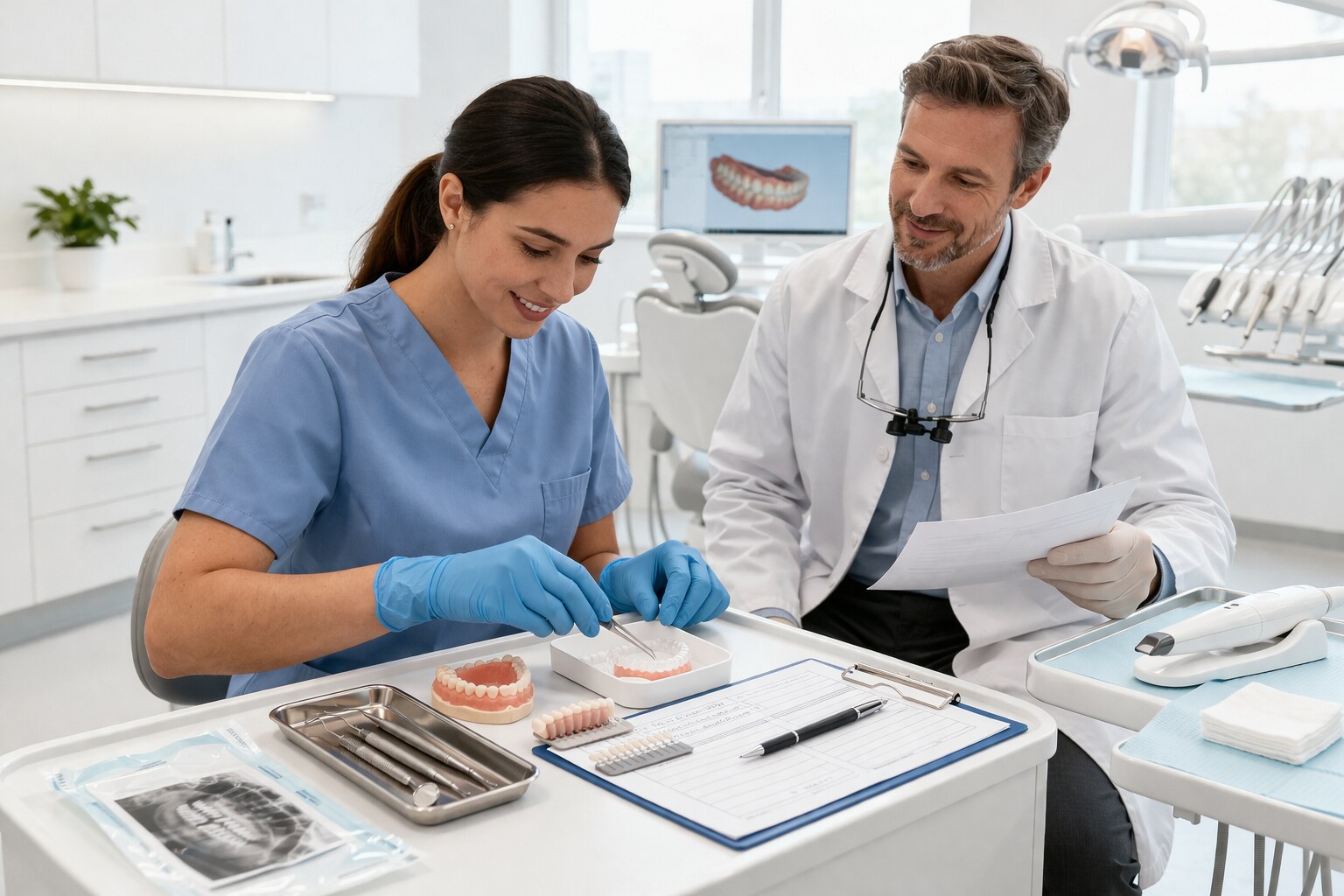
Catch missing basics such as the receiving lab, selected dentist, patient name, due date, or procedure context before the case feels finished.
Catch case-type gaps such as tooth numbers, material, shade, implant system, connection, size, retention, or scan body details before the lab has to ask for them.
Catch missing or weak evidence such as absent bite records, opposing scans, unreadable PDFs, blurry shade photos, low-detail meshes, or bad ZIP files before send time.
Why Teams Adopt It
The practice wins first, and the lab relationship improves because of it.
Practices adopt LabPreCheck because it protects time on both ends of the handoff. Assistants and office managers get a clearer workflow. Labs receive a submission that is easier to review. The relationship improves because fewer preventable details, contradictions, and file-quality problems are making it out the door.
That makes the platform feel less like another admin system and more like a practical layer that helps the team send a case the lab can actually start. The product earns its place when fewer cases bounce back for missing basics, missing implant details, weak shade support, or unusable files. If the team is ready to test that value, go to Try for Free or review Pricing.