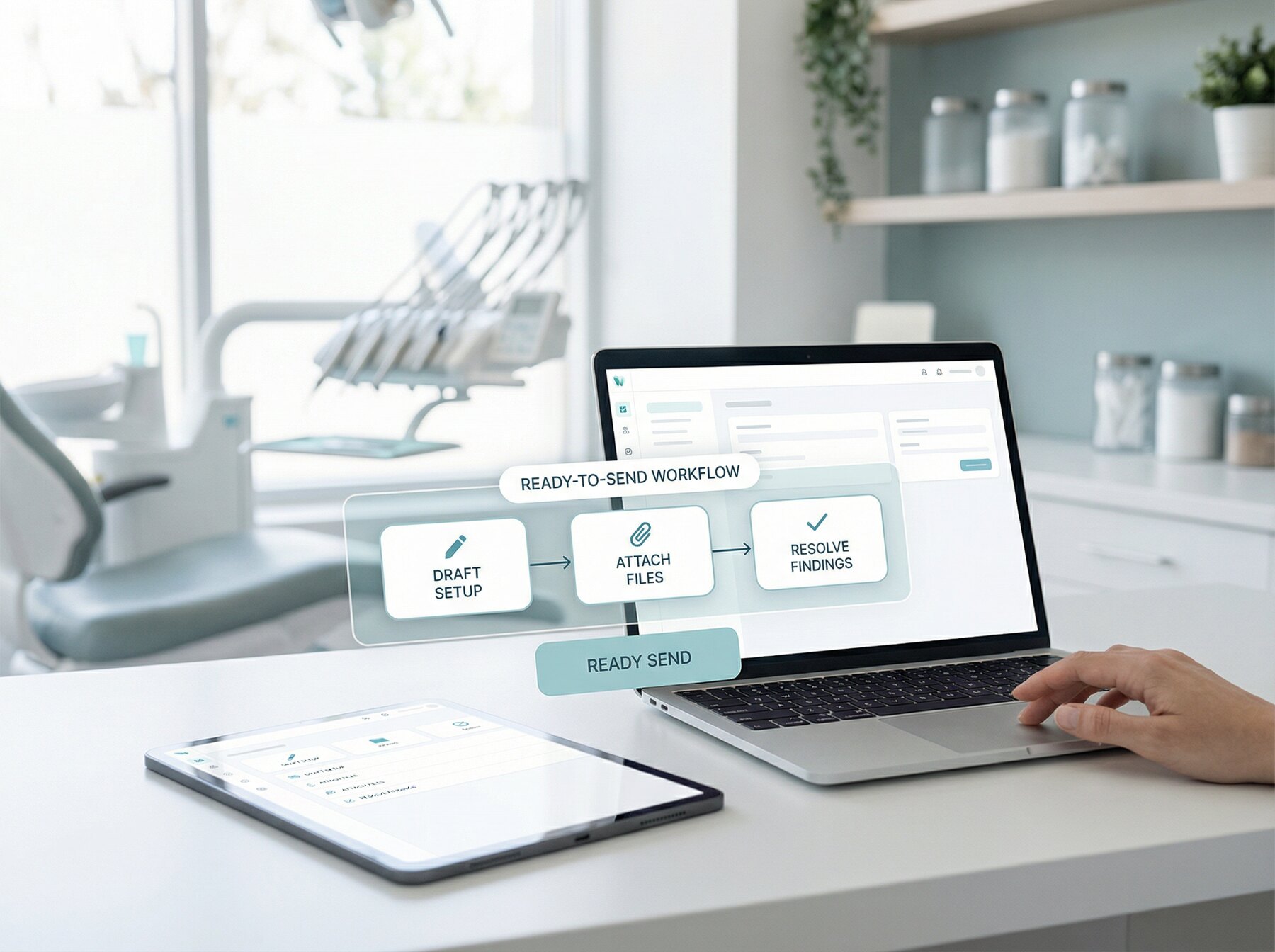
Case Readiness
See how AI-assisted PreCheck helps your team tell the difference between a case that is merely submitted and a case the lab can actually start.

A 2023 audit found 3 in 4 partial denture prescriptions missed key requirements. (source)
A Wales crown study found about 1 in 5 submissions still needed clarification. (source)
A structured training study cut noncompliant prescriptions from 85% to 30%. (source)
Ready Means Startable
A case is ready when the receiving lab can actually start from the submission, not when the practice hopes it is finished.
AI Finds The Miss
AI-assisted PreCheck reads forms, notes, and uploads to surface missing basics, missing required evidence, contradictory details, and unusable files before the handoff.
Send Time Stays Clear
PASS, WARN, and BLOCK make the send moment clearer so the team can move, review, or stop before the lab has to chase the basics.
What Ready Means
Readiness means the receiving lab can understand the submission and begin work without preventable follow-up.
A case is ready when the receiving lab, the responsible dentist, the case type, and the required files or notes all line up. If any of those pieces are still fuzzy, the handoff is not really ready no matter how finished it feels inside the practice.
That is why readiness should be defined by what the lab can start, not by how long the team already spent getting it out the door. Submitted is not the same thing as startable. LabPreCheck is built to make that visible before send time, not after the callback. If your team wants the practical prep pattern behind that standard, read Intake Checklists.
Where Cases Break
Most delays start in the same few places, and they are usually visible earlier than the team expects.
Most readiness problems come from predictable breakdowns, not rare exceptions. The practice thought the submission was complete, but one missing decision, one missing attachment, or one bad file changed what the lab needed to see.
Those misses create delay because the lab has to stop, call, message, or wait instead of starting the work. The goal is to catch them while the case is still easy to fix.
Basic setup is still missing, such as the receiving lab, selected dentist, patient name, due date, or procedure context.
Case-type details are still missing, such as tooth numbers, requested restoration, material, implant system, connection, size, or retention.
Required evidence is still missing, such as a bite record, opposing scan, scan body reference, or supporting RX.
The submission contains a direct conflict, an impossible due date, or a required file that is objectively unusable.
How Teams Get There
Choosing the lab early and letting PreCheck review the submission makes readiness visible before send time.
Practices move faster when readiness is visible before the send moment. Teams can still move quickly, but they stop gambling on whether the submission will bounce back later for something basic, contradictory, or unusable.
That is the role LabPreCheck is designed to play. The product uses lab-specific setup plus AI-assisted PreCheck to show what still needs attention before the handoff becomes a back-and-forth problem. The same practice-first logic is explained in For Practices.
Set The Context
Select the lab, dentist, and case type first.
Build The Packet
Let the right files, notes, and case-type details collect under that specific destination.
Review Before Send
Use AI-assisted PreCheck to resolve missing fields, missing files, contradictions, and file-quality problems before the case is sent.